French Press Filters Explained: Why Some Presses Leave Sludge and Others Do Not
If you have ever taken the last sip of a French press coffee and gotten a mouthful of mud, you already know why the filter matters.
Here is the thing: the filter is the part of a French press that really makes a difference in your cup. Glass vs steel, round vs square, $25 vs $100, none of that changes taste nearly as much as how fine the filter is and how well it fits.
Let me break down the different types, what you get from each one, and how to tell when yours is worn out.

Why French press coffee has sludge at all
When you grind coffee, you do not get perfectly even pieces. You get mostly coarse bits and some tiny dust-like particles called fines. A metal mesh catches the coarse bits but lets some fines slip through. Those fines settle at the bottom of your mug as sludge.
That same metal mesh also lets the coffee oils through, which is why French press has that rich, heavy body a paper filter strips out. So there is always a trade-off: finer filter, cleaner cup, but harder plunge and a slightly lighter body.
The four filter types compared
| Filter | Grit in the cup | Body | Plunge effort | Found on |
|---|---|---|---|---|
| Single mesh | Some | Full and heavy | Easy | Bodum Chambord, Bodum Brazil |
| Mesh plus extra screen | A bit less | Full | Easy to moderate | Mueller |
| Dual screen | Low | Full | Moderate | Frieling |
| Double micro-filter | Lowest | Full but cleaner | Firm | Espro P7 |
| Paper add-on | Almost none | Lighter | Firm and slow | Some Espro filters, cut paper discs |
Single mesh: the classic Bodum filter
One stainless screen, a cross plate and a spiral spring around the edge that presses the mesh against the glass. Simple, cheap, and every spare part is easy to buy.
What you get: the classic French press cup. Heavy body, lots of flavor, and a little silt at the bottom. Most people just leave the last sip.
Who it is for: anyone who likes French press the way it has always been.
Extra screen filters: Mueller
Mueller markets its press as four-level filtration. In practice it is a standard mesh plunger plus one extra coarse screen. It catches a little more than a single mesh, but do not expect a dramatically cleaner cup. More pieces also means more to rinse.
Dual screen: Frieling
The Frieling uses a pre-filter that catches most of the grounds, then a finer screen that catches what gets past it. The result is noticeably less grit than a Bodum without making the plunge hard work. For me, that is the sweet spot between clean and easy.
Double micro-filter: Espro
This is the big upgrade. Espro stacks two baskets of very fine stainless mesh. Reviewers who brew it next to a Bodum Chambord see far less sediment. It is the closest a French press gets to a paper-filter cup while keeping the oils and body.
There is a bonus too. The fine mesh seals the grounds off better after you plunge, so your coffee is less likely to keep extracting and go bitter while it sits.
ESPRO P7 French Press - Double Walled Stainless Steel Insulated Coffee and Tea Maker (Brushed Stainless Steel, 18 Ounce)

- Maximum Residue Filtration: ESPRO Patented dual-layer micro-filter and ultra-fine stainless steel mesh -12x finer than standard-capture most coffee grounds and fine particles for a smoother brew. Any remaining fine sediment naturally settles at the bottom of the carafe, helping keep it out of your cup when pouring.
- 10 Bonus Paper Filters Included: For those who prefer the ultra-clean, oil-free flavor of a pour-over style cup, the included pack of 10 paper filters gives you that same crisp, light-bodied taste.
- Double-walled Hot & Cold Retention: Keeps coffee hotter for longer while the outer body stays cool. Brew up to 18oz (2 cups) with one easy press. Just add grounds, pour hot or cold water, steep 3-4 minutes, press gently, and serve. Ideal for hot coffee or refreshing cold brew.
- Crafted For Purity & Safety: Made with BPA-free materials, this press is rustproof and built to last. Its shatterproof body offers confidence in every pour. Enjoy pure flavor with this Coffee French Press. Durable French Press for coffee or tea for everyday brewing.
- Perfect gift idea: Elegant, durable, and thoughtfully designed, this French Press makes a stylish gift for tea and coffee lovers on birthdays, women's day, holidays, and other special occasions.
- Easy to Clean: Dishwasher safe and Engineered for convenience, this press combines style with strength. A perfect addition to modern kitchens, this Stainless Steel Coffee Maker redefines brewing. Exceptional camping French Press for on-the-go perfection.
As an Amazon Associate, we may earn a small commission from qualifying purchases.
The catch: it pushes back. Owners switching from a Bodum say the plunge feels stiffer. Espro says if your grind is too fine, the filters can clog and pressing gets hard. Grind coarse, press slowly, and clean the baskets often. If your hands are weak or sore, this is not the press for you. See the best French presses for arthritis instead.
Paper add-ons
A paper disc cut to fit under your mesh, or a paper filter basket, catches almost all sediment and a good chunk of the oils. Your coffee will taste closer to drip or pour-over: cleaner, lighter, less body.
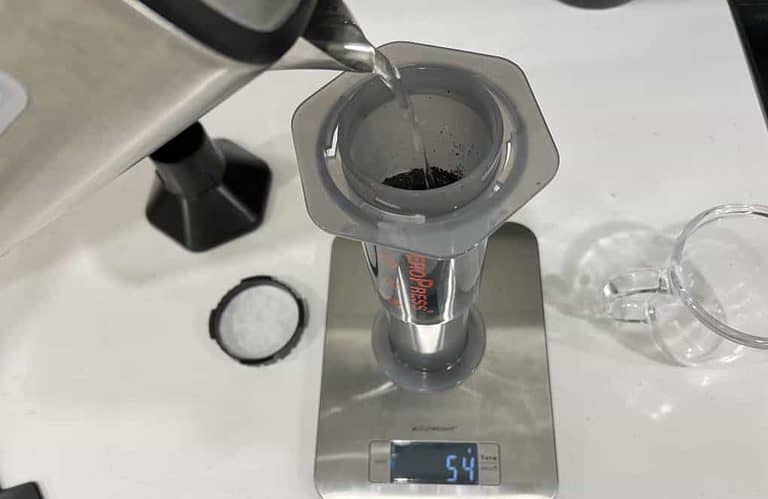
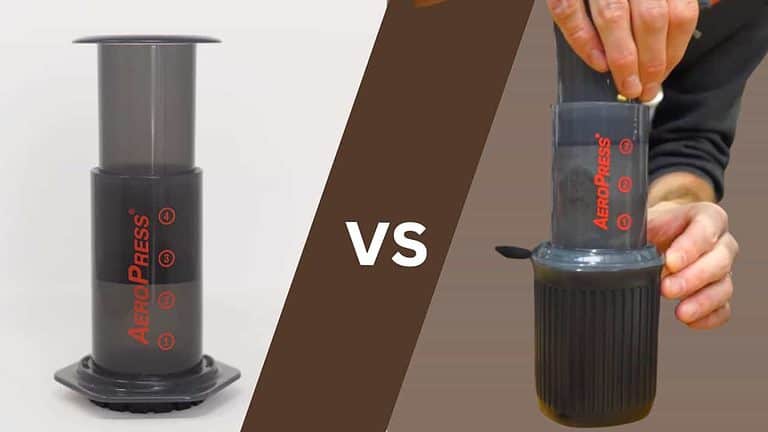
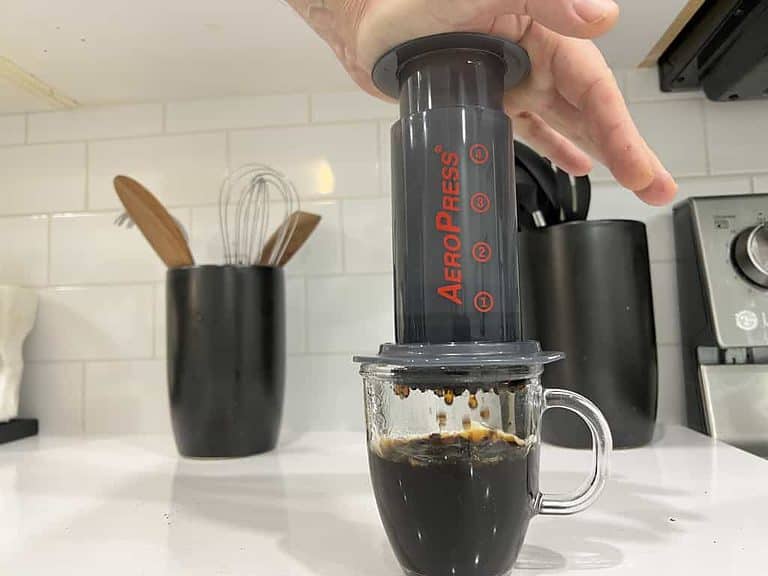
If that is the cup you actually want, you might be happier with a pour-over brewer or an AeroPress. See AeroPress vs French Press.
Your grind matters as much as your filter
Here is something a lot of people miss. You can buy a $120 press with the best filter on the market, and if you use pre-ground coffee made for drip machines, you will still get sludge and a stuck plunger. Drip grind is too fine for a press.
A burr grinder set to coarse (about like sea salt) makes far fewer fines than a blade grinder. That one change cleans up your cup more than most filter upgrades. See our grind size chart and burr grinder comparison.
Signs your filter needs replacing
- Your cup has more grit than it used to, with the same beans and grind.
- The mesh is bent, frayed or has a tear you can see.
- The spring around the edge does not press against the glass anymore, so grounds sneak up the sides.
- Coffee tastes stale even right after a deep clean.
Mesh wears out. Plunging hard, a fine grind, and the odd drop all bend it over time. That is why I always say buy a press you can get spare filters for.
How to replace a French press filter
- Order the right part. Search your exact brand and size. A 34 oz screen will not fit a 17 oz press.
- Take a photo first. Before you take the old one apart, snap a picture so you remember the order.
- Unscrew the bottom. Hold the plunger rod and turn the bottom plate counter-clockwise.
- Stack the new parts. On a Bodum it is usually cross plate, mesh, then spiral plate.
- Screw it back on firmly so the layers do not shift.
- Test with water. Plunge some plain hot water and check that the edge touches the walls all the way around.
Make your filter last longer
- Plunge slowly. Forcing it bends the mesh.
- Grind coarse. Fines clog and stress the screen.
- Take it apart weekly and wash out the trapped oils. Here is how: How to Clean a French Press.
So which filter should you buy?
- Love classic French press and do not mind a little silt: any Bodum. It is the best value.
- Want less grit without much extra effort: Frieling.
- Grit is a dealbreaker: Espro P7.
For the full buying breakdown, see How to Choose a French Press. Still getting sludge with a good filter? Try these 7 fixes.
FAQ
Is some sediment normal in French press coffee?
Yes. A little silt at the bottom of the mug is part of French press. A gritty cup all the way through is not.
Do French press filters wear out?
Yes. Replace yours when you notice more grit or see the mesh bending or tearing.
Can I use a paper filter in a French press?
Yes, with a disc cut to fit or a press made for paper. You get a cleaner but lighter cup.
Why is my French press so hard to push down?
Usually the grind is too fine or the filter is clogged. Grind coarser and clean the mesh.