The Inverted AeroPress Method: Benefits and Trade-Offs
What is the inverted AeroPress method? Some coffee enthusiasts turn the brewer upside down to reduce early drip-through and extend immersion time. However, AeroPress strongly discourages inversion because the setup becomes less stable and can spill hot liquid. This guide explains the method’s appeal, its drawbacks, and the safer upright alternatives.
The inverted method changes how the chamber is supported while brewing, but it does not guarantee a smoother, richer or more flavorful cup. The standard AeroPress method provides control over coffee dose, grind, water temperature and brew time. See our standard versus inverted comparison.
Rather than recommending a hot-liquid inversion procedure, this article focuses on what changes between the two approaches and how you can achieve a longer immersion using a compatible upright setup.
For consistent results, start with the manufacturer’s upright instructions, use a stable mug, and adjust one brewing variable at a time. If early drip-through is a problem, consider a compatible AeroPress Flow Control Filter Cap.
AeroPress Brewing Options Compared
AeroPress Brewing Products Compared
Compare the key features, then see current product details and pricing on Amazon.

- Paper-filtered concentrate or regular coffee
- Small batch
- Follow maker safety guidance
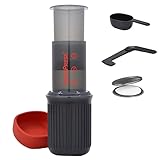

- Designed to reduce early drip-through
- Metal filter
- Confirm exact model fit

- Alternative to paper
- Compatible with listed Original/Go
- Clean after brewing

- Fine filtration
- Disposable
- Check filter format and pack count
As an Amazon Associate, we may earn a small commission from qualifying purchases.
What is the Inverted AeroPress Coffee Method?
The inverted AeroPress method is an alternative brewing configuration developed by coffee enthusiasts. AeroPress’s own instructions use the standard upright method and advise against inverting the brewer because of instability and spill risks.
Its purpose is to reduce early liquid drainage while grounds steep. A properly fitted upright Flow Control Filter Cap is an alternative that addresses this without requiring a hot, filled brewer to be turned over.
The standard AeroPress method uses immersion followed by a gentle press through a filter. It is not conventional high-pressure espresso brewing; its taste depends mainly on the coffee, dose, grind, water and steep time.
Inversion can change the amount of time water remains with the grounds before pressing, but it does not automatically produce smoother or stronger coffee. The Original AeroPress was invented by Alan Adler; the inverted technique was adopted separately by enthusiasts.
Upright AeroPress Brewing: A Safer Alternative
A longer immersion is possible without inversion. For example, a compatible Flow Control Filter Cap limits drip-through while you brew in the standard upright orientation. Always follow the instructions for your exact model.
Equipment for an Upright AeroPress Brew
AeroPress or AeroPress Go
AeroPress filters
Coffee beans
Water kettle or coffee pot
Timer
Cup or carafe
Example Brewing Ratio
Coffee: 16-19 grams of fine to medium-fine ground coffee
Water: 240 ml (240 grams)

Measure and Grind the Coffee
For a repeatable upright recipe, measure your coffee using a scale and select a grind suited to your brewing time. Our grind-size guide covers how these variables influence extraction.
Keep the Brewer Upright and Stable
Safety: Do not invert an assembled brewer containing hot liquid. AeroPress warns that the inverted setup is less stable and can cause burns if it tips. Instead, place the chamber upright on a sturdy mug with its filter correctly secured.
Add Coffee to the Upright Brewer
In an upright brewer, add your measured ground coffee according to the manufacturer’s normal instructions. Keeping the brewer securely supported is more important than experimenting with an inverted position.
Choose Your Water Temperature
Choose a water temperature appropriate to the coffee and recipe. There is no universal temperature that works best for every AeroPress brew; consult our brewing temperature guide for context.
Manage Early Drip-Through
If you want to minimize early dripping or extend immersion, use a compatible Flow Control Filter Cap while the brewer remains upright. Follow its manufacturer’s instructions and avoid pressing into fragile glassware.
Steep Consistently
Keep the brew time consistent while comparing recipes. A longer steep can affect extraction, but stirring or steeping for a particular number of seconds does not guarantee a better cup.
Press Gently

Apply gentle, steady pressure with a secure upright brewer. Never force a jammed plunger, and do not flip a brewer containing hot water or coffee.
Serve and Compare
Serve the prepared coffee and note the changes that improved your preferred flavor. For a separate step-by-step upright method, see our AeroPress brewer review and guidance.
Tips
- Try different bean varieties or roasts using the manufacturer’s standard upright AeroPress instructions to compare flavor safely.
Adjust the ratio of coffee to water to your liking.
Use a timer to keep track of the brewing time.
Use a gentle, controlled press with the upright method. Pressing force should not be treated as a guaranteed way to change extraction; resistance can indicate that the grind is too fine or the filter needs checking.

Why Some Brewers Discuss Inversion
Enthusiasts often cite three reasons for inverted brewing: less early dripping, longer steeping and more freedom to use coarse grinds. Those potential conveniences need to be weighed against AeroPress’s explicit stability and burn warning.
Flavor: Neither orientation guarantees a bolder or smoother cup. Brewing variables and the beans themselves remain decisive.
Time control: The ability to keep liquid in contact with grounds can also be achieved using the standard upright position and a compatible Flow Control Filter Cap.
Extraction: Greater immersion time is not proof of better extraction. Evaluate grind, coffee dose, temperature and contact time together rather than assuming inversion improves flavor.
Compatibility: The best brewing approach depends on the equipment and filters. The upright method is the manufacturer’s recommended starting point for its brewers.
Inverted AeroPress: Claimed Benefits and Safety Drawbacks
Inverted brewing is sometimes described as convenient for longer immersion, but the manufacturer’s safety advice should take precedence over anecdotes about a better-tasting cup.
Potential appeal: Less early drip-through during immersion, which can also be achieved with a compatible upright flow-control cap.
Potential appeal: A longer steep, which is not unique to inversion and does not guarantee better flavor.
Unproven claim: An inverted brewer has not been shown here to produce more consistent flavor under controlled conditions.
Limitation: Inverting the brewer does not make it compatible with additional bean varieties or roast types; both approaches brew ordinary coffee beans.
The central drawback is safety: an inverted brewer containing hot liquid is less stable. AeroPress specifically warns of tipping and exposure to hot liquid.
Instability: Compared with an upright brewer resting on a mug, the inverted configuration has a greater risk of tipping or spilling.
Complexity: The extra handling provides more opportunities for accidents. A standard upright method avoids that issue.
Equipment differences: Filter caps and seals differ among AeroPress models. Check compatibility and condition before use; inversion is not a solution for damaged parts.

AeroPress Upright vs. Inverted: Key Differences
Both upright and inverted versions steep grounds in water before pressing, but only the standard upright method is recommended by the manufacturer. Their flavor profiles overlap substantially when dose, grind and steep time are comparable.
Standard Upright Brewing
In standard brewing, the chamber sits securely on a sturdy cup with the filter cap attached. Coffee and water are combined in the chamber before a gentle pressing step.
Follow your model’s instructions for an upright brew. Brief early drip-through is often normal; a compatible Flow Control Filter Cap can limit it without turning a filled brewer upside down.
Why Inverted Brewing Is Discouraged
Inverted brewing refers to a reversed brewing position intended to retain liquid for longer. Because AeroPress discourages it due to hot-liquid spill and burn risks, this article does not provide an inverted procedure.
The water and coffee are stirred and steeped for 1-2 minutes. The filter cap is then replaced, and the AeroPress is placed on the cup or carafe and pressed down to extract the coffee. No need to worry about coffee leaking out too early.
Practical Differences
There is no universal flavor advantage from inversion. Start with a measured upright recipe and adjust the coffee-to-water ratio, grind and contact time to your liking.

Coffee-to-Water Ratio Matters More Than Orientation
The brewing ratio refers to the amount of coffee grounds used in relation to the amount of water. A typical ratio for brewing is 1:15, meaning for every 1 gram of coffee, you use 15 grams of water.
This ratio can be adjusted to taste, depending on how strong or weak you like your coffee. If you prefer a more robust cup, you can increase the ratio; if you prefer a weaker cup, you can decrease the ratio.
In a sample recipe with 16 g coffee and 240 g water, changing the coffee or water amount affects concentration. Grind size and extraction also influence perceived strength. Use the brewing ratio as a consistent starting point rather than proof that inversion improves the cup.
Frequently Asked Questions
What is the Inverted AeroPress Coffee Method?
The inverted AeroPress method is an alternative configuration that some enthusiasts use to limit early drip-through. AeroPress explicitly advises against it for safety reasons.
Does Inversion Improve Flavor Compared With Upright Brewing?
Inversion does not guarantee a slower or smoother extraction. You can control immersion time with standard upright brewing and a suitable flow-control accessory.
How Long Should an Upright AeroPress Brew Steep?
Brew times depend on recipe, grind, water temperature and coffee preference. There is no single recommended inverted steep time, and we recommend using a safe upright method instead.
Final Thoughts: Choose a Safer Upright Method
The inverted method is often discussed in coffee communities, but it is not required for controlled immersion brewing. In the standard upright method, keep the brewer secure and use a compatible filter accessory if early dripping is a concern.
Flavor depends on the grounds, dose, grind, water and steep time—not an inherent superiority of inversion. Our AeroPress versus pour-over comparison explains how these brewing methods differ.
We recommend following the manufacturer’s standard upright instructions rather than trying a hot-liquid inversion. For troubleshooting and drip-through concerns, visit our AeroPress troubleshooting article.
Competition recipes and individual preferences vary, but their popularity does not change the manufacturer’s safety guidance or demonstrate that inversion is best for everyone.
AeroPress advises against the inverted method because the upside-down setup is less stable. For a steadier routine, follow the manufacturer’s upright instructions and consider compatible flow-control accessories when early drip-through matters. Our standard-versus-inverted methods guide explains the trade-offs.