How to Choose a French Press: What a $25 Press and a $120 Press Actually Get You
If you landed here, you are probably about to buy a French press. Maybe you have a few tabs open with a Bodum, an Espro and some stainless one you have never heard of, and you are trying to figure out why one costs $25 and another costs $120.
Here is the thing nobody tells you: they all brew coffee the exact same way. Grounds sit in hot water for four minutes, you push a screen down, you pour. A cheap press and an expensive press will both make a great cup if your beans and grind are right.
So what is the extra money for? Really only three things: how hot your coffee stays, how much grit ends up in your mug, and whether the thing survives being knocked into the sink. Once you know which of those you care about, the right press picks itself.
Let me walk you through it.
The short version
If you do not want to read the whole thing, here is where I land:
- Best for most people: Bodum Chambord, 34 oz. About $30 to $45. Same coffee as presses that cost three times more.
- Best on a tight budget: Bodum Brazil. About $20 to $30. Same glass and brew as the Chambord, plastic frame instead of steel.
- Hate sludge in your cup: Espro P7. About $120 for 18 oz. The cleanest cup a French press can make.
- Want it hot and want it to last: Frieling double-wall. About $100 for 17 oz, with a 5-year limited warranty.
- Want steel without spending much: Mueller. About $30 to $55. Will not break, but heat retention reviews are mixed.
Prices move around a lot, so check the current price on each card below before you decide.
What your money actually buys
Here is the whole market in one table. Look at the right-hand column. That is the only thing changing as the price goes up.
| Press | Typical price | Body | Filter | What the extra money gets you |
|---|---|---|---|---|
| Bodum Brazil 34 oz | $20 to $30 | Glass, plastic frame | Single mesh | Nothing extra. It is the baseline. |
| Bodum Chambord 34 oz | $30 to $45 | Glass, steel frame | Single mesh | A sturdier, nicer-looking frame |
| Mueller 34 oz | $30 to $55 | Double-wall steel | Mesh plus extra coarse screen | Cannot shatter |
| Frieling 17 oz | About $100 | Double-wall 18/10 steel | Dual screen | Real heat retention, less grit, 5-year warranty |
| Espro P7 18 oz | About $120 | Double-wall steel | Double micro-filter | The cleanest cup, cannot shatter |
Notice what is not in that column: better tasting coffee. The flavor comes from your beans, your grind and your timing. A $120 press will not rescue stale grocery-store coffee. If you are on a budget, a $25 press plus a decent grinder beats a $120 press with pre-ground beans every single time.
Does the expensive one pay for itself?
Let us do the math, because this is the question everyone is really asking.
Say you make one pot a day. Over two years that is about 730 pots.
- A $35 Chambord works out to about 5 cents a pot.
- A $120 Espro works out to about 16 cents a pot.
That is 11 cents a day for a noticeably cleaner cup. If grit bugs you every morning, that is an easy yes. If you brew twice a month, it is a lot of money for a press that sits in the cupboard.
And here is the part people forget: if you break one glass beaker in those two years, the gap shrinks. Replacement beakers are not free. Clumsy household? Kids? Tile floor? Steel starts looking like the cheap option.
Step 1: Pick your size (and ignore the word cup)
This trips up almost everyone. French press makers count a cup as about 4 oz. So an 8-cup press is 34 oz, which is two or three real mugs, not eight.
| Label | Real capacity | Real mugs | Good for |
|---|---|---|---|
| 3-cup | 12 oz | 1 | Just you, one mug |
| 4-cup | 17 oz | 1 to 2 | You plus a refill, or a couple |
| 8-cup | 34 oz | 2 to 3 | Most homes |
| 12-cup | 51 oz | 4 to 5 | Families and guests |
My rule: when in doubt, size up. You can brew half a pot in a big press. You cannot brew a full pot in a small one. The 34 oz is also the size with the most spare parts available.
Watch out with the steel presses, though. The Frieling and Espro prices above are for the small 17 to 18 oz sizes. Go up to a full liter and they cost even more. More on sizes in French Press Sizes Explained.
Step 2: Glass or steel?

Go glass if you pour the whole pot right away, you like watching the coffee bloom, and you want to spend under $45. Glass is neutral, easy to clean, and Bodum sells replacement beakers when you eventually knock one into the faucet. And you will.
Go steel if you like a second cup that is still hot 20 minutes later, you have broken a beaker before, or the press is going camping. Double-wall steel is the only way to get real heat retention. Frieling says theirs keeps coffee hot up to four times longer than glass.
One warning: not all steel presses insulate equally. Owners of cheaper ones like the Mueller are split. Some love it, others say the coffee still cools fast. If heat is your main reason for buying steel, that is where spending more makes sense. The full breakdown is in Glass vs Stainless Steel French Press.
Step 3: The filter is where the real difference is
If you have ever had French press coffee that felt like drinking a puddle, that was the filter, or the grind, letting fines through.
- Single mesh (Bodum Chambord and Brazil): Lets the oils through, which gives French press its rich, heavy body. Also lets some silt through. You will leave the last sip in the mug.
- Dual screen (Frieling): A pre-filter plus a finer screen. Noticeably less grit without changing the body much.
- Double micro-filter (Espro): Two fine stainless baskets. Reviewers who run the Espro next to a Chambord see far less sediment. It is the closest a press gets to a paper-filter cup.
The catch with finer filters: they push back. Owners switching from a Bodum say the Espro takes noticeably more effort to plunge, and Espro itself says too fine a grind will clog it. That matters if your hands are not what they used to be. If that is you, read the best French presses for arthritis before you buy.
Deeper dive: French Press Filters Explained.
The presses worth buying, and who each one is for
Bodum Chambord: the one I would tell most people to buy
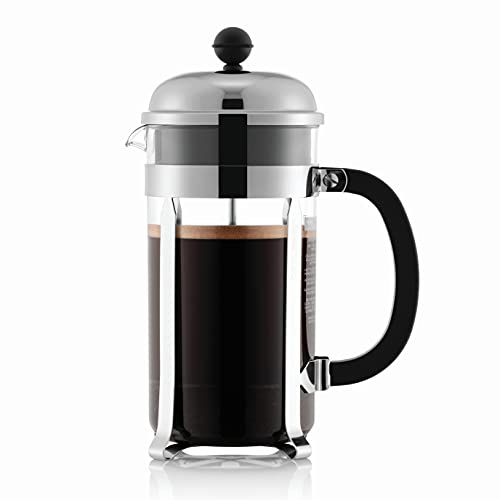
Bodum 1928-16US4 Chambord French Press Coffee Maker, 1 Liter, 34 Ounce, Chrome
- Check specifications and compatibility before purchasing.
As an Amazon Associate, we may earn a small commission from qualifying purchases.
There is a reason this is the press you picture when someone says French press. It has been around for decades, it makes the same coffee as presses that cost three or four times more, and you can buy every single part separately. Break the glass? Order a beaker. Filter getting tired? Order a filter. That is a big deal over years of daily use.
The polished steel frame is what separates it from the cheaper Brazil. It feels solid, it looks good on the counter, and the handle is metal instead of plastic.
Buy it if you want a great all-round press for under $45 and you pour your coffee right away.
Skip it if grit drives you crazy (get the Espro) or you have already broken two glass presses (go steel).
Bodum Chambord French Press — Pros & Cons
The classic glass press, and still the benchmark everything else gets compared to.
Pros
- Great coffee for the money Usually about $30 to $45 for the 34 oz size. The brew is the same as presses costing far more.
- Spare parts everywhere Replacement beakers and filters are cheap and easy to find, so one accident does not mean a new press.
- Steel frame, not plastic The polished frame and handle feel more solid than the budget Bodum Brazil and hold up for years.
- Lots of sizes From 12 oz up to 51 oz, so you can match it to your household.
Cons
- Glass can break A knock on the faucet is the most common way these presses die.
- Coffee cools quickly Single-wall glass, so pour it all off once the steep is done.
- Some sludge Reviewers comparing it with an Espro see visibly more sediment in the cup.
For most people buying their first French press, this is the answer. It makes the same coffee as presses that cost three times more, you can watch it brew, and Bodum sells every spare part. The only real downsides are glass that can break and coffee that cools fast.
Bodum Brazil: the best budget press
Bodum Brazil French Press Coffee and Tea Maker, 34 oz, Black

- Check specifications and compatibility before purchasing.
As an Amazon Associate, we may earn a small commission from qualifying purchases.
Here is the honest truth about the Brazil versus the Chambord: reviewers who compare them say the coffee is identical. Same style of glass beaker, same filter format. The only difference is the frame. The Brazil swaps the steel cage for a one-piece plastic base and handle.
That makes it cheaper and lighter. It also means it looks and feels a little less premium. If you are buying your first press to see if you even like French press coffee, this is the smart buy. If it is going to sit on your counter for the next ten years, spend the extra $10 to $15 on the Chambord.
Bodum Brazil French Press — Pros & Cons
Same Bodum glass and brew as the Chambord, with a light plastic frame instead of steel.
Pros
- Same coffee as the Chambord Reviewers who compare them say the brew is identical. You are only changing the frame.
- Light Retailers list the 34 oz model around one pound empty.
- Big, chunky handle One-piece plastic handle you can wrap your whole hand around.
- Budget price Usually about $20 to $30.
Cons
- Glass beaker Still breaks if it hits a hard floor.
- Plastic look Feels less premium than the steel Chambord and can stain over the years.
- Cools fast Single-wall glass, so do not leave coffee sitting in it.
The Brazil brews exactly like the Chambord because it uses the same glass beaker style and filter format. You save money and weight by swapping the steel frame for a one-piece plastic base and handle. That makes it the best budget press, and the easiest full-size press to lift if your hands are sore.
Espro P7: for people who hate sludge
ESPRO P7 French Press - Double Walled Stainless Steel Insulated Coffee and Tea Maker (Brushed Stainless Steel, 18 Ounce)

- Maximum Residue Filtration: ESPRO Patented dual-layer micro-filter and ultra-fine stainless steel mesh -12x finer than standard-capture most coffee grounds and fine particles for a smoother brew. Any remaining fine sediment naturally settles at the bottom of the carafe, helping keep it out of your cup when pouring.
- 10 Bonus Paper Filters Included: For those who prefer the ultra-clean, oil-free flavor of a pour-over style cup, the included pack of 10 paper filters gives you that same crisp, light-bodied taste.
- Double-walled Hot & Cold Retention: Keeps coffee hotter for longer while the outer body stays cool. Brew up to 18oz (2 cups) with one easy press. Just add grounds, pour hot or cold water, steep 3-4 minutes, press gently, and serve. Ideal for hot coffee or refreshing cold brew.
- Crafted For Purity & Safety: Made with BPA-free materials, this press is rustproof and built to last. Its shatterproof body offers confidence in every pour. Enjoy pure flavor with this Coffee French Press. Durable French Press for coffee or tea for everyday brewing.
- Perfect gift idea: Elegant, durable, and thoughtfully designed, this French Press makes a stylish gift for tea and coffee lovers on birthdays, women's day, holidays, and other special occasions.
- Easy to Clean: Dishwasher safe and Engineered for convenience, this press combines style with strength. A perfect addition to modern kitchens, this Stainless Steel Coffee Maker redefines brewing. Exceptional camping French Press for on-the-go perfection.
As an Amazon Associate, we may earn a small commission from qualifying purchases.
The Espro exists for one reason: to fix the biggest complaint about French press coffee. Its double micro-filter catches fines a Bodum lets straight through, so you get the heavy body without the mud at the bottom.
It costs a lot. Espro lists the 18 oz around $120 and the 32 oz around $150. And it takes more muscle to plunge. But if you drink French press every day and the grit has always bugged you, this is the press that makes you stop thinking about it.
Buy it if you drink French press daily and want the cleanest cup.
Skip it if you have weak or sore hands, or you are just trying French press out.
Espro P7 French Press — Pros & Cons
The press for people who love French press body but hate the sludge.
Pros
- Cleanest cup you will get from a press Two stacked micro-filter baskets catch the fines a single Bodum screen lets through. Reviewers comparing them side by side see far less sediment.
- Stops extraction after the plunge The fine mesh seals the grounds off better, so the last cup is less likely to go bitter while it sits.
- Double-wall steel Holds heat well and will not shatter if it slips off the counter.
- Two sizes 18 oz for one or two people, 32 oz for a household.
Cons
- Expensive Espro lists the 18 oz P7 around $120 and the 32 oz around $150. Sale prices vary.
- Stiffer plunge Owners coming from a Bodum say it takes more effort. Grind too fine and it can clog.
- Fussier to clean Two filter baskets to rinse, and some owners find the plunger tight to pull back out.
If grit at the bottom of your mug drives you nuts, the P7 is the one press that really fixes it. You pay roughly three to four times what a Bodum costs, and the plunge takes more muscle. For a daily drinker who keeps a press for years, that math works out. For an occasional brewer, it is hard to justify.
Frieling: for coffee that stays hot
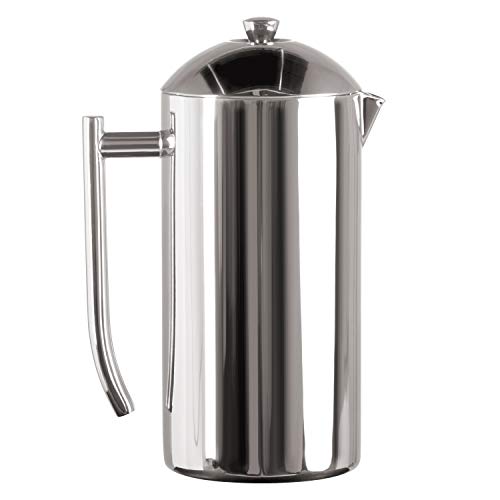
Frieling Double-Walled Stainless-Steel French Press Coffee Maker, Polished, 17 Ounces
- Ultimate Coffee Experience: Delight in an exceptional coffee experience with the Frieling French Press Coffee Maker. Its Zero Sediment Dual Screen ensures a smooth, sediment-free brew, making it a superior choice among metal French presses
- Superior Heat Retention: Featuring a dual-wall stainless steel design, this insulated French Press maintains optimal temperatures longer than a glass French press. Ideal for daily use and as a camping coffee maker, its sturdy construction is perfect for any adventure
- Award-Winning Excellence: Esteemed by leading magazines and coffee aficionados, the Frieling French Press Coffee Maker is a preferred choice in luxury hotels. This stainless steel coffee maker consistently delivers a flavorful, full-bodied brew
- Effortless Brewing Guide: For an ideal brew, add two tablespoons of ground coffee per cup of water into your stainless steel coffee pot. Pour slightly cooled boiling water, stir, brew for four minutes, then press the plunger slowly for delicious French coffee press results
- Commitment to Quality: Since 1988, Frieling has been known for well-crafted products like this all stainless steel coffee maker. Our mission is to provide innovative solutions for daily challenges, ensuring each product is a valuable addition to your life
- Versatile Use: This 17 Oz polished stainless steel French Press is perfect for everyday use, camping, and travel. With a reusable filter and manual operation, it serves as a reliable non-plastic coffee maker for all your coffee and tea adventures
As an Amazon Associate, we may earn a small commission from qualifying purchases.
The Frieling is the one I would buy if I sipped slowly and wanted my second cup hot. It is polished 18/10 steel, double-walled, with a dual-screen filter, and retailers list a 5-year limited warranty. That warranty alone tells you something about how long it is meant to last.
The downside is price per ounce. About $100 for 17 oz is steep when a Chambord holds twice as much for well under half the money. Some reviewers flat-out say it is overpriced unless you love the look. I would say it is worth it for a daily drinker who has replaced a few glass beakers already.
Frieling Double-Walled Stainless French Press — Pros & Cons
A premium steel press that is built to last for years.
Pros
- Really keeps coffee hot Frieling claims up to four times longer than glass, and it is the part owners praise most.
- Dual-screen filter A pre-filter plus a fine screen catches grit that gets past a basic Bodum screen.
- 5-year limited warranty Retailers list a 5-year manufacturer warranty, which is rare for a French press.
- Fully dishwasher safe The whole press can go in the dishwasher.
Cons
- Pricey for the size About $100 for 17 oz. A Bodum Chambord holds twice as much for well under half the price.
- No view of the brew You time it instead of watching the color.
- Small for families 17 oz is about two mugs. Bigger Frieling sizes cost even more.
You are paying about $100 for a 17 oz press, which is a lot. What you get is polished 18/10 steel, a dual-screen filter, real insulation and a 5-year limited warranty. If you drink French press every day and are tired of replacing glass, it pays for itself. If you only brew on weekends, buy a Bodum.
Mueller: steel on a budget
If you want something that will not shatter and you do not want to spend Frieling money, the Mueller is the go-to. It is all stainless and goes in the dishwasher. Just know that it is a budget press. Its four-level filter is mostly a regular mesh with one extra screen, and owners are split on how well it keeps coffee hot. I cover it properly in the best shatterproof French presses.
Side-by-side comparison
French Presses and Immersion Brewers Compared
Compare the key features, then see current product details and pricing on Amazon.

- Metal mesh plunger
- 34 oz stated capacity
- Consider glass care and sediment

- Double-wall construction
- 17 oz stated capacity
- Compare insulation and cleanup

- Fine-filtration plunger system
- 18 oz stated capacity
- Check filter care
- Basic manual brewing
- 34 oz stated capacity
- Compare handle and glass protection

- Paper-filtered coffee
- Small batch size
- Different style from a French press
As an Amazon Associate, we may earn a small commission from qualifying purchases.
Mistakes I see people make when buying
- Buying a 3-cup press for two people. Remember the 4 oz cup.
- Spending $120 on a press and using pre-ground coffee. Pre-ground is usually too fine for a press, which means sludge and a stuck plunger no matter how good the filter is. Get a burr grinder or buy coarse ground. See our grind size chart.
- Buying steel for heat, then leaving coffee on the grounds. Coffee keeps extracting as long as it sits on the grounds, even after you plunge. That is what makes the second cup bitter. Pour it off into a mug or carafe.
- Forgetting about the handle. A full 34 oz press is about two pounds of water before you count the press. Make sure you can hold it comfortably.
- Buying a brand with no spare parts. Mesh wears out. If you cannot buy a new filter, the whole press goes in the trash.
So which one would I buy?
If I were spending my own money today and I just wanted great coffee every morning, I would get the Bodum Chambord 34 oz and put the money I saved toward a good burr grinder. That combo makes better coffee than an expensive press with a cheap grind.
If I had already broken a glass press or two, I would skip straight to the Frieling. And if the grit was what kept me from loving French press in the first place, I would get the Espro and never look back.
Want to compare our full reviews? See our best French press coffee makers roundup, or go straight to the best stainless steel French presses.
Once it arrives: get the coffee right
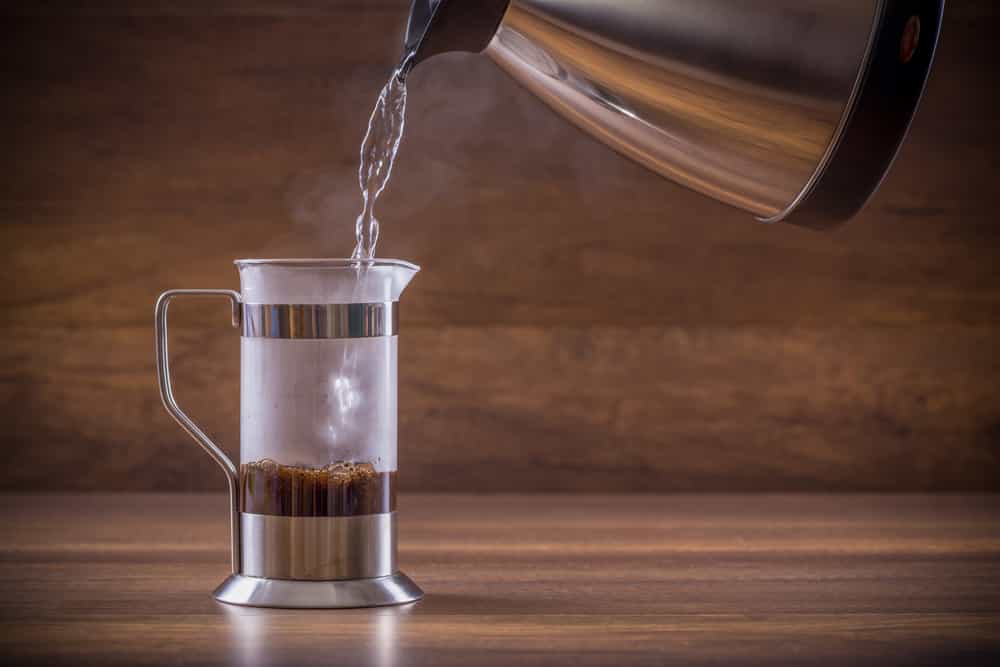
Your new press will only be as good as your technique. The basics:
- Coarse grind, about like sea salt.
- About 1:15 coffee to water by weight. Around 63 grams of coffee for a full 34 oz press. See our coffee-to-water ratio guide.
- Water just off the boil, around 195 to 205 F. Our brewing temperature chart explains why.
- Four minutes, then plunge slowly and pour it all off. Our steep time guide shows when to go longer or shorter.
Coffee coming out muddy or bitter anyway? Try the 7 fixes for muddy or bitter French press coffee. And to keep it tasting fresh, see how to clean a French press.
Is a French press even right for you?
If you want a perfectly clean, light, tea-like cup, a French press will always frustrate you a little. Look at pour-over or an AeroPress with paper filters instead. Our AeroPress vs French press comparison will help you decide.
FAQ
Is an expensive French press worth it?
Only if you want one of three things: a cleaner cup (Espro), coffee that stays hot (Frieling), or a press that cannot break. The coffee itself will not taste better just because the press costs more.
What size French press should I buy?
For most homes, 34 oz (sold as 8-cup). It makes two to three regular mugs. If it is just you and one mug, 12 to 17 oz.
Is the Bodum Chambord better than the Bodum Brazil?
They make the same coffee. The Chambord has a steel frame and handle and feels sturdier. The Brazil has a plastic frame and is cheaper and lighter.
Is glass or stainless steel better?
Glass is cheaper and lets you watch the brew. Steel keeps coffee hot and will not break. Flavor is the same.
Why is my French press coffee so gritty?
Usually the grind is too fine or the filter is worn. Grind coarser first. If you still hate it, a press with a finer filter like the Espro fixes it.