How to Use a French Press with Weak Hands or Arthritis (Step by Step)
You love your French press coffee. But lately your hands have been making it harder. Maybe the plunger fights back, maybe a full press feels heavy, or maybe unscrewing the filter to clean it has become the part you dread.
You do not have to give it up. With a few changes to how you set up and brew, a French press can be surprisingly easy on your hands. Here is the whole routine, step by step.
Quick note: these are practical kitchen tips from a coffee guy, not medical advice. If something hurts, stop. An occupational therapist can suggest tools made for your own hands.
Where the effort actually goes
Before you change anything, it helps to know what is making it hard. There are four moments in a French press brew that ask the most of your hands:
- Lifting the kettle to pour in the water
- Pushing the plunger down
- Lifting and tilting the full press to pour
- Unscrewing the filter to clean it
Every tip below goes after one of those.
Step 1: Set up a brewing station
Do this once and it pays off every morning.
- Non-slip mat or a damp tea towel where the press lives. It stops the press sliding while you plunge, so you do not need to grip it hard.
- Everything at counter height. Coffee, scoop, press, mug, kettle, all in one spot. No reaching up into cupboards or bending down with a hot press.
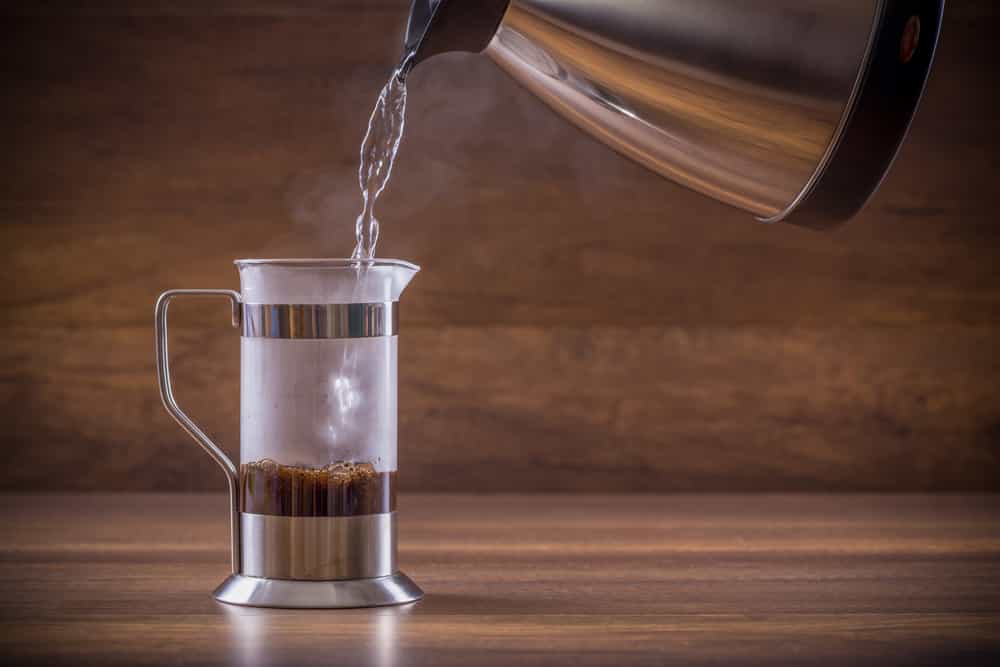
- A small kettle right next to the press. A full 1.7 liter kettle is almost four pounds of water. A 0.8 to 0.9 liter gooseneck is about half that. See lightweight kettles for weak wrists.
- A canister with an easy lid. Screw-top jars and stiff clips are a daily pain.
- A scoop that holds your whole dose, so you scoop once instead of counting tablespoons.
Step 2: Brew a smaller batch
This is the single biggest change you can make. Water weighs about 2.2 pounds per liter, so a full 34 oz press is about two pounds heavier than an empty one. A half batch, around 17 oz, cuts that in half.
Keep the same coffee-to-water ratio. For 17 oz, that is about 32 grams of coffee. Our French press size chart has amounts for every size.
Step 3: Grind coarse (or buy it that way)
A fine grind is the number one reason a plunger fights back. Tiny particles clog the mesh, and the plunger has to push against them. A coarse grind, about like sea salt, lets it glide down.
If grinding is hard on your hands, two options:
- Ask for French press grind when you buy coffee. Most coffee shops will grind a bag for free.
- Get an electric burr grinder with a one-button start. See the best coffee grinders for arthritis.
Step 4: Bring the water to the press, not the press to the water
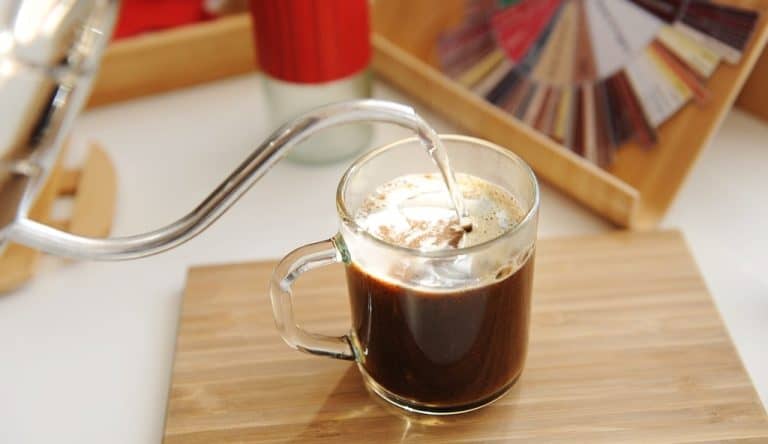
Leave the press on its mat. Bring the kettle over and pour slowly. If one hand feels unsteady, hold the kettle with both hands, or rest your other hand under your forearm. A gooseneck spout makes this easier because the water comes out slowly instead of gushing.
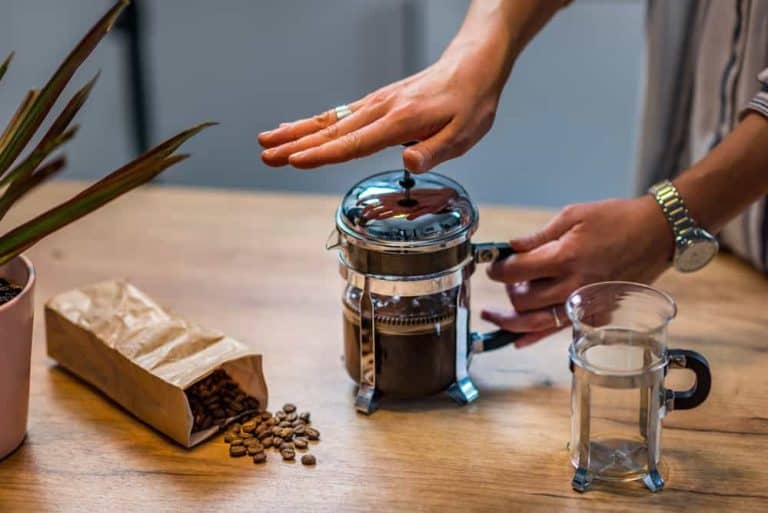
Step 5: Plunge with your palm, not your fingers
This is the step most people get wrong, and it makes a big difference.
- Put the lid on with the plunger sitting on top of the coffee.
- Steady the press by resting your other hand flat against the side. No need to squeeze.
- Lay your palm flat on top of the plunger knob. Keep your wrist straight.
- Lean in gently with your body weight instead of pushing with your arm and fingers.
- Go slow. If it resists, stop, lift it up an inch, and press again.
If your plunger is always a fight even with a coarse grind, your press may have a very fine filter. Double micro-filter presses like the Espro take noticeably more effort than a basic Bodum. Here is the difference: French Press Filters Explained.
Step 6: Pour in two steps
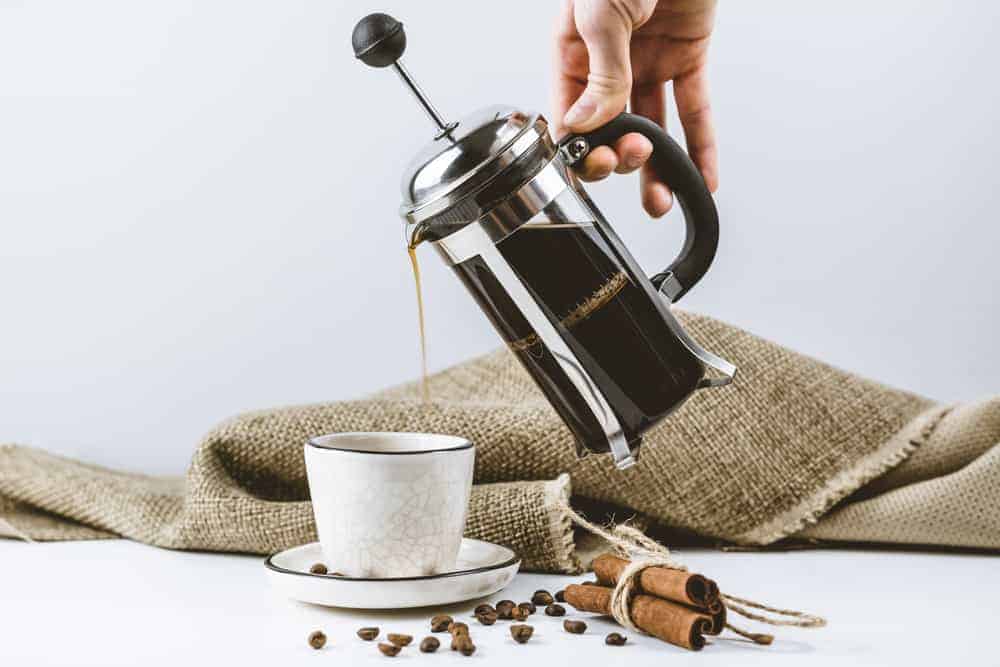
- Put your mug right beside the press on the mat, so you tilt rather than lift.
- If it feels heavy, pour half, set the press down, rest a second, then pour the rest.
- Pour it all off right away. Coffee left sitting on the grounds turns bitter, so you would have to lift the press again later anyway.
- A light thermal carafe is handy. One pour into the carafe, and you are done lifting the press.
Step 7: Make cleaning easier
Unscrewing the filter plate is a twist-and-grip job, which is exactly what sore hands hate.
- A rubber jar-opener pad gives you a lot more grip on the plunger.
- A long-handled bottle brush means no squeezing a sponge.
- A dishwasher-safe press lets the machine do most of the work. The Frieling and Mueller steel presses are both listed as dishwasher safe.
- Daily, just pump soapy water through the plunger instead of taking it apart. Save the full take-apart for once a week.
Full steps are in How to Clean a French Press.
Cheap tools that help
- Slip-on foam handle grips make thin handles thicker and easier to hold.
- A mug with a big handle, or one you can hold with both hands.
- A kitchen scale so you can weigh coffee straight into the press instead of scooping and counting. See our coffee scale comparison.
- A non-slip mat under the press and the mug.
When it is time for a different press
Sometimes the trick is not technique, it is the press itself. If yours is heavy, has a thin metal handle, or has a filter that always fights you, a lighter press can make a bigger difference than any tip here.
The one I would look at first is the Bodum Brazil. It is one of the lightest full-size presses, the one-piece plastic handle is big enough to wrap your whole hand around, and its simple mesh filter plunges easily. It is also cheap, about $20 to $30.
Bodum Brazil French Press Coffee and Tea Maker, 34 oz, Black

- Check specifications and compatibility before purchasing.
As an Amazon Associate, we may earn a small commission from qualifying purchases.
If you worry about dropping glass, I compare unbreakable options in Best French Presses for Arthritis or a Weak Grip. And if a French press is still too much, see the easiest coffee makers for arthritis.
FAQ
Why is my French press so hard to push down?
Usually the grind is too fine or the filter is clogged with old oils and fines. Grind coarser and clean the mesh.
Can I use a French press one-handed?
Many people can, with the press on a non-slip mat, a half batch, and a palm press on the plunger.
Is a smaller French press easier to use?
Yes. Less water means less weight to lift and pour.
What is the easiest French press to plunge?
One with a simple single mesh filter, like the Bodum Brazil or Chambord, used with a coarse grind.